Why I started browsing xfakes: from random clicks to unexpectedly immersive experience
Every time I randomly click on visual websites, I feel like I'm lost in a forest of creativity: styles are too mixed, content is chaotic, and I don't know where to start. But the first time I clicked into xfakes, I realized that 'random clicking' can also become a comfortable experience. The dark background paired with dense yet orderly thumbnails made me feel like I was thrown into a visual exhibition area as soon as I entered; my eyes had a place to rest, and my thoughts were naturally guided, unlike other sites that feel chaotic right from the start. At that moment, I understood it might be a site for 'people like me who just want to open and see something casually,' so I followed its structure and browsed through to see if it suits as a daily visual entry point.
Homepage, categories, and content cards: why I can start browsing on xfakes without thinking
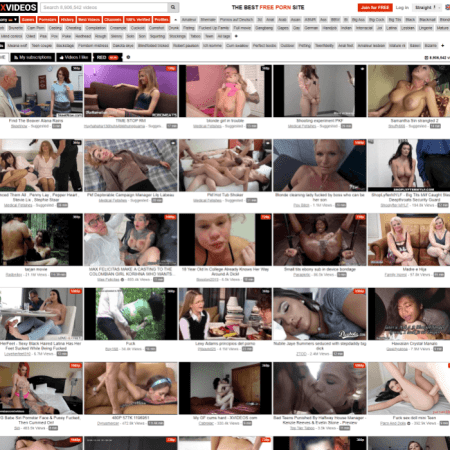
My first impression of xfakes was: no need to learn how to operate, no need to think about the structure. The homepage’s dense but non-oppressive thumbnail design lets me scan many works at a glance; uniform sizes and dark background also prevent clutter. More comfortable are the category tags, like flipping drawers—one click switches to another theme group without page jumps, reloads, or getting lost. The small numbers under content cards showing views and favorites, though not heavily interactive, are very useful for someone like me who likes to see 'what others are watching' first; I can quickly decide whether to click. The overall experience is that it simplifies all troublesome steps, lighting up wherever I click.
Browsing smoothness, content volume, and theme diversity: the more you browse, the more you want to browse
During use, I found xfakes’ browsing path has 'zero learning cost': click category → view thumbnails → click in → go to next page. There’s no interference from other miscellaneous items. Regarding content volume, after flipping a few pages, I knew its content library is sizable; each page has a dozen or so images, and page numbers keep changing, indicating plenty to browse. Themes are also rich, ranging from characters and scenes to creative styles, and switching categories shows clear style differences. This 'non-repetitive, non-stacked' content distribution makes people want to keep scrolling. For those who like to find inspiration and enjoy immersive image viewing, this continuous visual stimulation is hard to stop.
No registration required, multiple languages, frequent updates: xfakes is friendly to both newcomers and regular users
Another thing that makes me comfortable is that I can use the main functions fully without logging in, no forced registration, no extra restrictions. This is great for first-time visitors. The language switch also enhances the site’s openness, giving the feeling not of a 'niche site' but a 'public visual space you can use right away.' The update speed is faster than I expected; when I open it every other day, I see new works, homepage content changes, and categories update. This freshness makes me feel the site is alive and encourages me to return periodically.
xfakes’ drawbacks and real usage feelings: more content means easier to get overwhelmed, filtering could be finer
Of course, xfakes isn’t without flaws. The biggest problem for me is choice overload when there’s too much content. Although categories solve part of it, detailed filtering is still insufficient; sometimes I want a specific style but have to browse slowly myself. This experience is fine for casual browsing, but when I have a clear goal, I wish for a second layer of filtering or sorting. However, this is not a fatal flaw, more like an inevitable minor side effect of large content volume.
Overall experience summary: suitable as a 'always browseable' visual gallery site
Overall, I would describe xfakes as a visual gallery you can visit anytime for a quick browse: enter and see → switch tags → enough content volume → clear style changes. It meets the needs of 'wanting to see images immediately,' 'wanting to switch themes,' and 'wanting to browse casually without thinking,' making it very suitable as my daily source for inspiration or a site to open casually when resting. Although filtering layers could be finer, for a visual creative browsing site, xfakes already achieves 'easy exploration' quite well.
If you want a visual theme site you can browse anytime, xfakes is very suitable
From an experience perspective, xfakes belongs to the kind of visual content library that 'gets easier the more you browse.' Advantages: quick to start, intuitive categories, large content volume, frequent updates. Disadvantages: choice difficulty when content density is high, filtering layers could be more refined. But overall, if you like browsing that 'shows content directly, switches multiple themes, and explores easily,' xfakes is definitely worth adding to your daily bookmarks.


 Chinese Adult Websites
 Real Young Girl Virginity Loss

 Free Instant Play
 Online Instant Play
 Yo Girl Incest
 Banned Film Paradise
 Adult Video APP (Application Center)
 Watch Porn for Free
 91 Pink Hole
 X Station Collection
 91 DouYin
 Yellow Fruit Short Drama
 AI Lust Beast Cave Academy
 91 Video
 Sports Chess and Cards
 New Lisboa
 Macau New Lisboa
 Venetian
 Macau New Lisboa
 Kaiyuan Chess and Cards
 Mahjong Win
 PG Entertainment
 Macau Casino
 Macau Grand Casino
 Macau Sands
 Gossip and Scandal Adult Websites
 Gossip Net
 Asian Porn Websites
 korean porn movie
 missav
 Free KISSAV
 Netflav